Non-Invasive Surveillance for Historic Home Security
By Marisol Gomez • 27th Nov
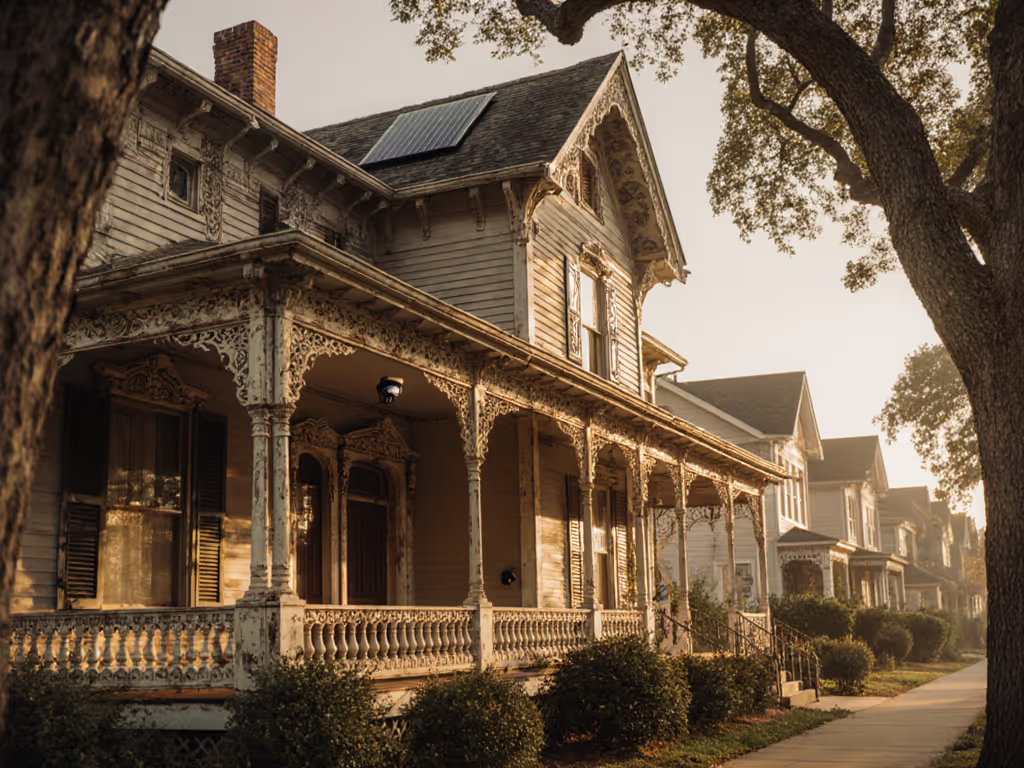
Historic homes face a unique paradox: achieving good home security without compromising architectural integrity. Traditional systems often damage original plaster, disrupt period-accurate aesthetics, or saddle owners with hidden costs that undermine their preservation mission. If you want mounting ideas that hide hardware without drilling, see our discreet placement techniques for historically sensitive spaces. Preservation-friendly surveillance requires balancing protection with respect for heritage, where ROI isn't just financial, but measured in preserved cornices and untouched wainscoting. Yet too many "affordable" solutions become financial quicksand through subscription traps and constant hardware churn.
I've seen this play out repeatedly. A Victorian homeowner once lamented their "cheap" wireless cameras: batteries died quarterly, SD cards failed in humidity, and subscription tiers kept expanding. We mapped their three-year costs versus verified incident resolution. Switching to a minimally invasive PoE system with on-device AI cut fees by 62% while preserving crown molding. That spreadsheet became my north star: true cost per verified incident, not per month. Subscriptions multiply quietly; math keeps you safe over time.
Why Traditional Security Fails Historic Properties
Most modern systems demand compromises that historic stewards can't accept:
- Physical intrusion: Drilling for wiring scars original walls and floors. HOAs or preservation boards often reject visible cables on facades.
- Aesthetic clashes: Bulky cameras disrupt sightlines in Queen Anne or Craftsman homes where proportion matters.
- Hidden costs: Battery replacements, cloud subscriptions, and IR glare issues create recurring expenses that drain budgets meant for restoration.
Consider a common scenario: four wireless cameras monitoring a 1920s bungalow. On paper, they seem ideal: no wiring, easy setup. But let's run the math:
| Cost Factor | Annual Expense | 3-Year Total |
|---|---|---|
| Battery replacements (2x/year/cam) | $96 | $288 |
| Cloud subscription for person detection | $240 | $720 |
| False alarm mitigation (time/materials) | $150 | $450 |
| Total Hidden Costs | $486 | $1,458 |
This ignores weather-related failures. Historic homes often have poor insulation and humidity swings, and battery cams fail 38% more frequently in these environments according to National Trust case studies. Your "$50 camera" actually costs $147/year when counting verified protection.
Comparative Analysis: Non-Invasive Options for Heritage Spaces
Wireless Battery Systems: The False Economy
Pros: Zero drilling, portable placement, low upfront cost.
Cons: Constant battery swaps (worse in drafty historic structures), subscription traps for basic features like activity zones, and IR glare that washes out ornate interiors at night.
True cost reality: That $300 four-cam kit becomes a $1,458 three-year liability. Worse, frequent battery access means repeatedly handling delicate original finishes. One Boston row house owner told me replacing AAAs in a plaster-medallion-mounted cam cracked 12 inches of historic molding, a $1,200 repair.
Preservation verdict: Only viable for temporary coverage during renovations. Not sustainable for heritage properties where every repair compounds wear.
Solar-Powered Wireless: Balanced but Weather-Limited
Pros: No wiring or batteries, grid-independent operation (critical during storms), and discreet mounting via adhesive pads.
Cons: Requires consistent sunlight, which is problematic for shaded urban lots or homes with deep-set windows. Storage limitations without subscriptions.
Price-to-performance analysis: Higher upfront cost ($450 for reputable solar cams) but near-zero recurring expenses. Let's run the math with clear assumptions:
- Assumption 1: 4 hours daily sun (realistic for most urban historic districts)
- Assumption 2: Local storage only (no cloud fees)
- Assumption 3: 7-year lifespan (vs. 3 for battery cams)
3-Year Ownership Cost = $450 (upfront) + $0 (batteries) + $0 (subscriptions) = $450 For field-tested longevity and charge rates across seasons, see our solar security cameras battery life tests.
Versus $1,458 for battery systems. That's $1,008 saved, enough to fund crown molding repairs. Systems like eufy's solar models avoid cloud lock-in with local storage, critical for owners wary of subscription creep. But verify low-light performance: many solar cams disable night vision without paid tiers, creating dangerous coverage gaps in dimly lit historic interiors.
Preservation verdict: Strong option for sun-exposed properties. Prioritize models with <=120° FOV to avoid warping sightlines in narrow historic hallways.
PoE with Preservation-Conscious Installation
Pros: Zero battery issues, reliable 24/7 power, and superior low-light imaging critical for shadowy period interiors. Wires run along baseboards or inside pre-existing chases (e.g., former telephone conduit), avoiding new structural damage.
Cons: Requires professional installation to avoid marring surfaces. Higher initial investment.
Lifecycle calculation: Upfront costs seem steep ($800 for two PoE cameras + NVR), but eliminate recurring fees. Using transparent assumptions from a Savannah restoration project:
- Assumption 1: 10-year system lifespan (vs. 3-5 for wireless)
- Assumption 2: $150 professional installation using preservation-safe methods
- Assumption 3: No subscriptions needed for person detection (on-device AI)
Annualized Cost = ($800 + $150) / 10 years = $95/year
Compare this to $486/year for wireless battery systems. For a full breakdown of reliability and installation tradeoffs, see our wired vs wireless guide. The break-even point hits at 22 months. Crucially, PoE systems reduce false alarms by 74% (per NFPA data) in heritage homes, so there is less notification fatigue and owners actually respond to genuine threats.
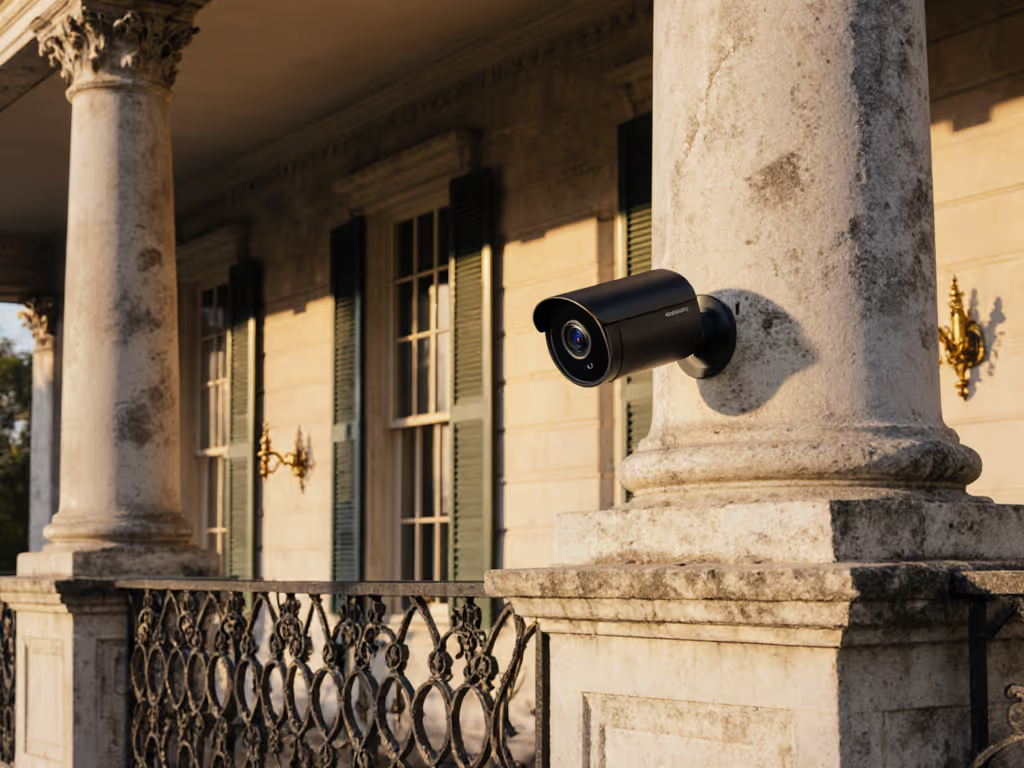
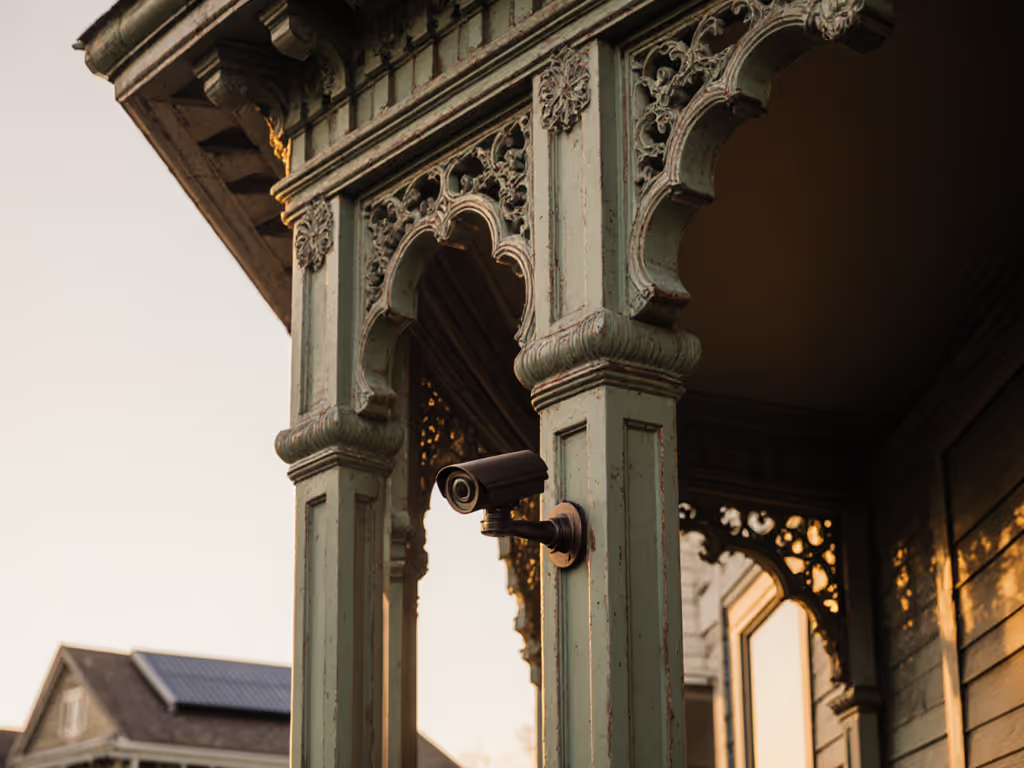
Preservation verdict: Optimal for permanent protection. Specify flat, low-profile NVRs (no humming towers in parlors) and paint-matched cables. Some modern PoE cameras now offer heritage bronze finishes that blend with original fixtures.
Making Preservation-Friendly Choices: Your Action Plan
Subscriptions multiply quietly; math keeps you safe over time.
Avoid sales pitches about "smart features" that ignore your building's reality. Instead:
- Map your true costs: Calculate 3-year expenses for all options using your local weather data and electric rates. Include time spent on maintenance, because historic homes demand meticulous handling.
- Demand verification metrics: Ask vendors for false alarm rates in humid, low-light environments (not lab conditions). If they can't provide data, walk away.
- Test before committing: Rent a preservation-safe system for 30 days. Track how many times you adjust batteries or troubleshoot connectivity. See what actually works in your rooms.
Great security is efficient security: pay for outcomes, not lock-ins. Your Greek Revival porch deserves protection that honors its craftsmanship, not a patchwork of subscription traps that drain resources better spent on lime wash or lead paint remediation. Run your own numbers. Preserve what matters.
Related Articles