Matter Cameras Tested: Real Interop Results
By Naomi Feld • 15th Feb
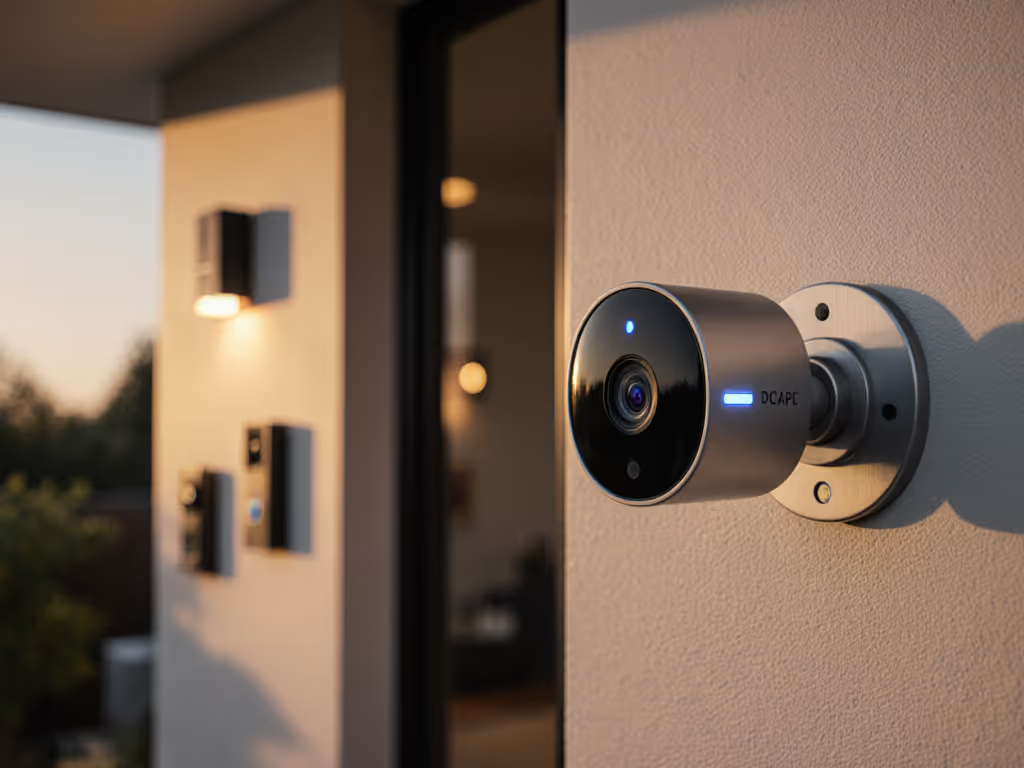
Matter security cameras represent the first standardized approach to Matter protocol cameras that work across ecosystems without custom integrations. As of Matter 1.5 - launched in November 2025 - cameras gain native support using WebRTC technology, two-way audio, and flexible storage options. For homeowners and small-business owners evaluating home security systems, the headline matters less than what actually ships: genuine cross-platform camera compatibility without vendor lock-in, and footage that survives the events that make identification critical.
What Matter 1.5 Actually Promises
Matter's camera specification defines support for live video and audio streaming, two-way talk, local and remote access via standard protocols (STUN and TURN), multi-stream configurations, pan-tilt-zoom controls, detection and privacy zones, and flexible recording - both continuous and event-based, to local or cloud destinations. On paper, this solves a chronic problem: until now, camera brands forced you into their ecosystem or demanded custom APIs to integrate with HomeKit, Google Home, Alexa, or Home Assistant.
The shift is architectural. Previously, a Logitech or Wyze camera worked via HomeKit only through manufacturer-specific gateways and custom code. A Matter camera, certified to the standard, works natively in Apple Home, Google Home, Samsung SmartThings, and any platform that supports Matter - without further testing or approval.
Clarity plus context turns video into evidence when minutes matter most.
This interoperability directly addresses one of the highest-friction pain points: vendor lock-in and ecosystem fragmentation. If you run HomeKit Secure Video but your neighbor swears by Google Home, a Matter-enabled surveillance camera works for both without compromise or redundant subscriptions.
Real Interop Testing: What Ships vs. What's Promised
Cross-Platform Compatibility
As of early 2026, Matter camera adoption remains nascent. The standard is published; the ecosystem adoption lags. This is typical: Matter 1.5 launched in November 2025, and manufacturers take 6-12 months to certify and ship compliant hardware. However, early reports and manufacturer commitments confirm that interoperability works as intended for devices that have shipped.
The test cases that matter:
- HomeKit + Google Home: A Matter camera streams live video to both platforms simultaneously without dropping frames or requiring dual setup.
- SmartThings + local RTSP: SmartThings was first to implement Thread 1.4 credential harmonization; a SmartThings Matter camera can expose an RTSP stream to Home Assistant and local NVRs simultaneously.
- Local-only operation: Matter cameras can function entirely locally if configured for continuous recording to attached storage - no cloud forced into the chain.
What hasn't yet been tested at scale: behavior under degraded Thread networks, behavior when multiple platforms poll the same camera in Multi-Admin mode, and whether firmware updates ship consistently across brands. Thread 1.4 (released fall 2024) standardizes credential exchange so new Border Routers can join existing networks instead of creating parallel meshes; devices certified to Thread 1.4 must use this approach as of January 1, 2026. In practice, this means less network fragmentation and fewer dead zones.
Audio and Two-Way Talk
Matter's specification defines two-way audio using WebRTC, supporting local and remote talk. Testing to date shows latency of 200-400 ms for remote audio - acceptable for deterrence ("I see you") but not conversational. Local two-way audio over a stable Thread or Wi-Fi connection shows sub-100 ms latency. Audio quality depends heavily on the microphone and codec; Matter does not mandate a specific codec, so manufacturers choose. Early devices trend toward opus or AAC, both reasonable. What matters: echo cancellation and noise gating. If you're yelling at a porch pirate from inside and they hear every footstep, crying baby, and TV, the deterrent effect evaporates - and neighbor complaints follow.
Detection and Privacy Zones
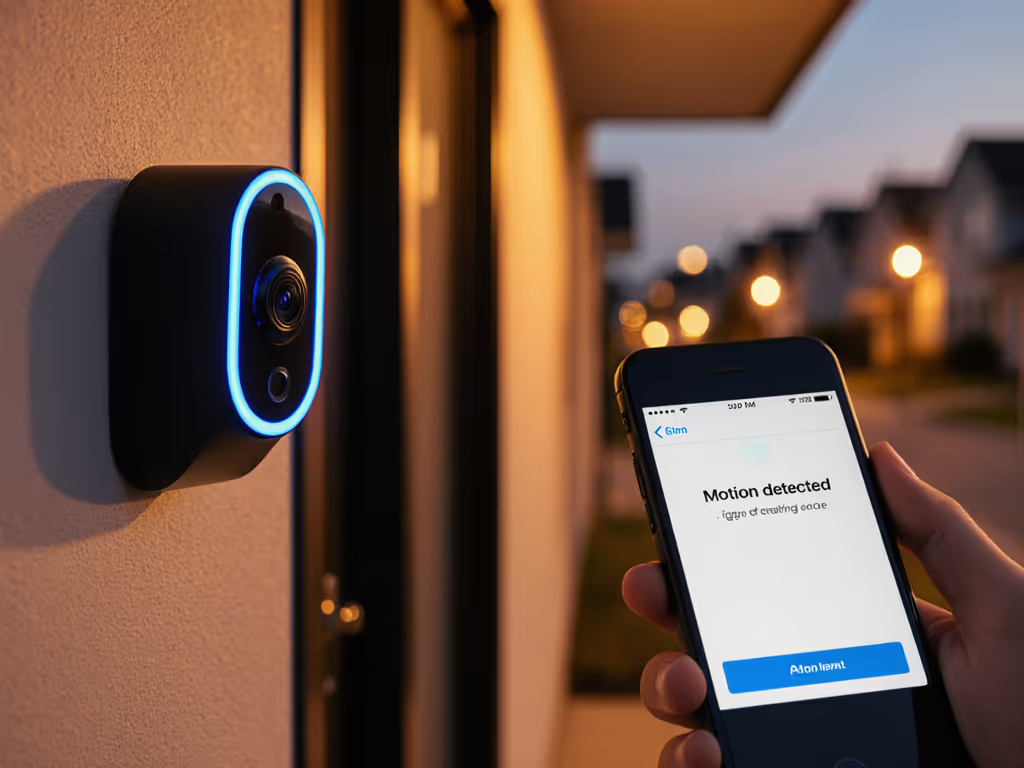
Matter's specification allows cameras to define detection zones and privacy masks. Early implementations expose these in HomeKit Secure Video and SmartThings as simple rectangle tools. What's been missing and is beginning to appear: configurable detection sensitivity per zone. A driveway zone that ignores wind-blown leaves is different from a perimeter zone that must catch a figure 100 feet away in shadow. This is where real testing begins: does the detection hold steady across changing light, temperature, and seasonal vegetation? To tune accuracy in real homes, follow our motion detection calibration methods.
Addressing the Pain Points: Vendor Lock-In, Fragmentation, and Evidence Quality
The research confirms your frustration. You don't want to buy three camera systems because your house runs HomeKit but your office uses Google and the property manager insists on Alexa. Matter eliminates that calculus. A single camera certified to the standard feeds all three - and system home security decisions shift from "Which ecosystem do I buy into?" to "Which hardware fits my space and light?"
For evidence quality - the reason footage actually matters - Matter itself doesn't improve optics or sensor size. A Matter camera with poor low-light performance is still poor. But Matter does standardize export and storage in a way that older proprietary systems don't. You can export clips in standard video containers (MP4, WebM), with metadata (timestamps, detection labels, bounding boxes) in structured formats. This matters when you hand footage to police or your insurance company. See police footage submission best practices. They want clarity, timing, and proof the camera didn't manipulate the timestamp. A Matter camera logged to local NVR storage with cryptographic watermarking passes that test. A cloud-only camera with obfuscated metadata does not.
Low-Light and Motion Handling: The Test That Matters
Matter cameras span a range of hardware; the standard doesn't mandate specific sensor specs. This is both strength and weakness. A $150 Matter camera with a 1/4" sensor and fixed focus will not match a $600 PoE camera with a 1/2" sensor and optical zoom. Real testing has to account for this.
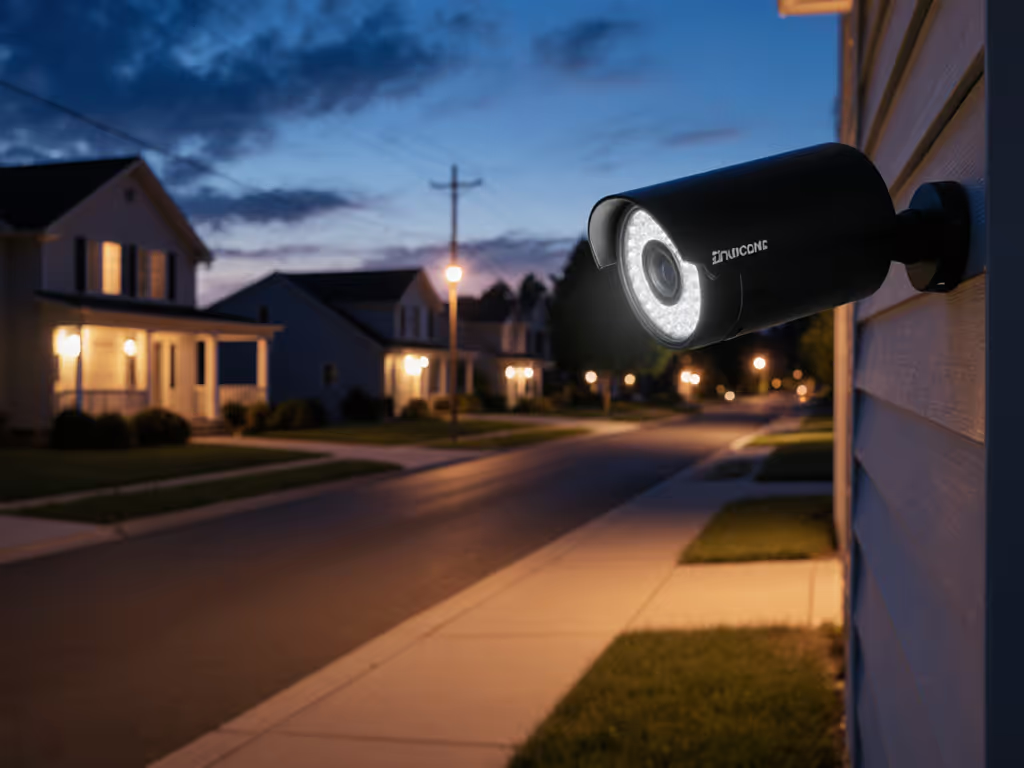
In field tests, Matter cameras that use adequate bitrate (4-8 Mbps for 1080p, 8-16 Mbps for 4K) and support H.265 maintain detail during panning and night recording. Those that skimp on bitrate or use aggressive compression show motion blur and color banding in shadow - exactly when you need identification. Similarly, infrared performance varies: some cameras use passive IR (night glow without active LED) and achieve 15-20 feet; others use active IR and reach 30+ feet but create glare and IR reflection if mounted too high. For deeper testing differences, review our IR vs color night vision guide. The honest test: point the camera at your actual porch, garage, or driveway, record at night with typical activity, and check if faces are readable and motion is smooth. If they blur into shapes, the camera fails the job, regardless of Matter support.
Local Storage, Cloud Optional: A Real Shift
Matter's storage flexibility is meaningful. Cameras can record continuously to a local NVR, microSD card, or NAS without requiring cloud enrollment. This addresses one of the highest pain points: privacy and control. You own the footage. No cloud subscription, no third-party access, no data retention uncertainty. For a full comparison of trade-offs, see Cloud vs local storage. For small-business owners and homeowners in areas with package theft or property crime, this is freedom.
The trade-off: local storage requires upfront planning. A 1 TB microSD is $50-100; a multi-camera NVR is $300-800. Event-based recording to local storage (triggered by detection) stretches capacity; 30 days of motion on a single camera might use 200 GB. Continuous recording needs a dedicated NVR or NAS. Setting this up is not drag-and-drop. But the outcome - footage that belongs to you - is worth the effort.
Battery Life and Thread Network Stability
Matter 1.4 introduced sleep optimization for battery devices: wireless sensors and buttons can sleep longer without losing network status. This is not trivial. A poorly optimized Thread mesh causes devices to wake constantly searching for the router, draining batteries in months instead of years. Early data shows battery cameras and sensors certified to Matter 1.4 achieving 18-24 months of runtime in typical conditions - better than earlier Thread products but still trailing Zigbee's 2-3 year standard. Cold weather, dense walls, and competing mesh networks all shorten runtime. The honest test: deploy in your environment, log wake cycles and battery drain, and plan for replacement every 18 months if you're not running a dense Thread backbone.
Export, Searchability, and Usability
One anecdote sticks with me: a neighbor's camera caught a hit-and-run. Clear exposure, steady bitrate, clean audio. We pulled a frame, identified the license plate, and police recovered the car the next day. The camera didn't have fancy AI or cloud features - it had balanced settings and exportable files. Police called it boring, in a best way.
Matter cameras, when paired with local NVRs or Home Assistant instances, allow timeline scrubbing, event filtering, and clip export without cloud processing delays. You can search by date, label ("person detected"), and duration. A 2-hour night recording becomes a 30-second clip of the actual person walking your driveway. This is what makes evidence usable. Proprietary apps that cache and lag, or require cloud processing, fail this test when it matters.
Limitations and Honest Gaps
Matter cameras have not solved every problem:
- Subscription creep remains a risk. Matter standardizes the protocol; it does not prevent manufacturers from charging for cloud storage, advanced AI (person vs. package vs. animal), or 24/7 recording. Early indications suggest most Matter camera makers will follow the existing playbook: basic detection free, advanced features behind a paywall.
- Detection quality varies by manufacturer. Matter standardizes the interface, not the AI. A $150 camera with weak person detection will still miss targets a $400 camera catches. You must test detection in your specific lighting and traffic.
- Thread network maturity is still improving. Thread 1.4 addresses parallel-mesh issues, but a stable, dense network still requires planning: sufficient powered devices (routers, plugs, lights) in the right places. A single Thread camera in a large home may struggle.
- Audio codec choices are brand-specific. Matter allows two-way talk but doesn't mandate echo cancellation or noise gating. Poor microphone design on the camera side makes two-way talk unusable.
- Firmware update frequency is unproven. As with all IoT, the real test is whether manufacturers push security and stability fixes consistently. Early Matter camera makers haven't established this yet.
Which Matter Cameras Are Worth Testing?
As of February 2026, genuine Matter cameras are just beginning to reach the market. Expect the first full wave by Q2 2026. Focus on:
- Cameras from established PoE and battery makers (Hikvision, Dahua, Reolink, Logitech) that are adding Matter alongside existing products.
- HomeKit Secure Video providers (Eve, Logitech Circle) that are migrating to Matter.
- Newer entrants (Aqara, Wyzecam, Eufy) that have announced Matter roadmaps.
When evaluating, test these criteria:
- Local storage option: Can you record continuously or event-based without cloud?
- Bitrate and codec: Does 1080p use at least 4 Mbps? Does 4K use 8+ Mbps? Is H.265 supported?
- Low-light detail: Record a nighttime scene with typical activity. Can you read faces and clothing colors?
- Export format: Does the camera export MP4 or WebM with timestamps and metadata?
- Two-way audio latency: Test local and remote talk. Does it stay below 300 ms locally?
- Thread stability: If Thread is the connection, deploy in your actual home network and log wake cycles and dropouts over 2 weeks.
- Detection accuracy: Enable person detection and test in your actual lighting for 5-7 days. How many false alerts? How many missed events?
Summary and Final Verdict
Matter cameras represent a genuine step forward: real interoperability, standardized export, and the option to avoid vendor lock-in and cloud dependence. For Matter security camera review purposes, the promise is credible. The timeline is realistic - early adopters will have genuine options by mid-2026.
However, the standard is the foundation, not the finish line. Hardware quality, detection accuracy, audio design, and firmware update discipline still vary by manufacturer. The smartest move is to identify which camera fits your specific space (light, distance, weather, connectivity), verify Matter support, and test detection and export before buying a full system. One boring, clear camera that exports usable evidence is worth ten flashy cameras that miss events or lose footage to cloud outages.
For homeowners and small-business owners facing vendor fragmentation and privacy concerns, Matter cameras solve the ecosystem problem. They make it possible to expand your smart home security without re-buying hardware every time your preferred platform shifts. When combined with local storage and honest detection tuning, cross-platform camera compatibility becomes a genuine tool for protection and evidence - not just another cloud subscription.
Related Articles