Security Camera Misconceptions: Truth About Limitations
By Kojo Mensah • 1st Jan
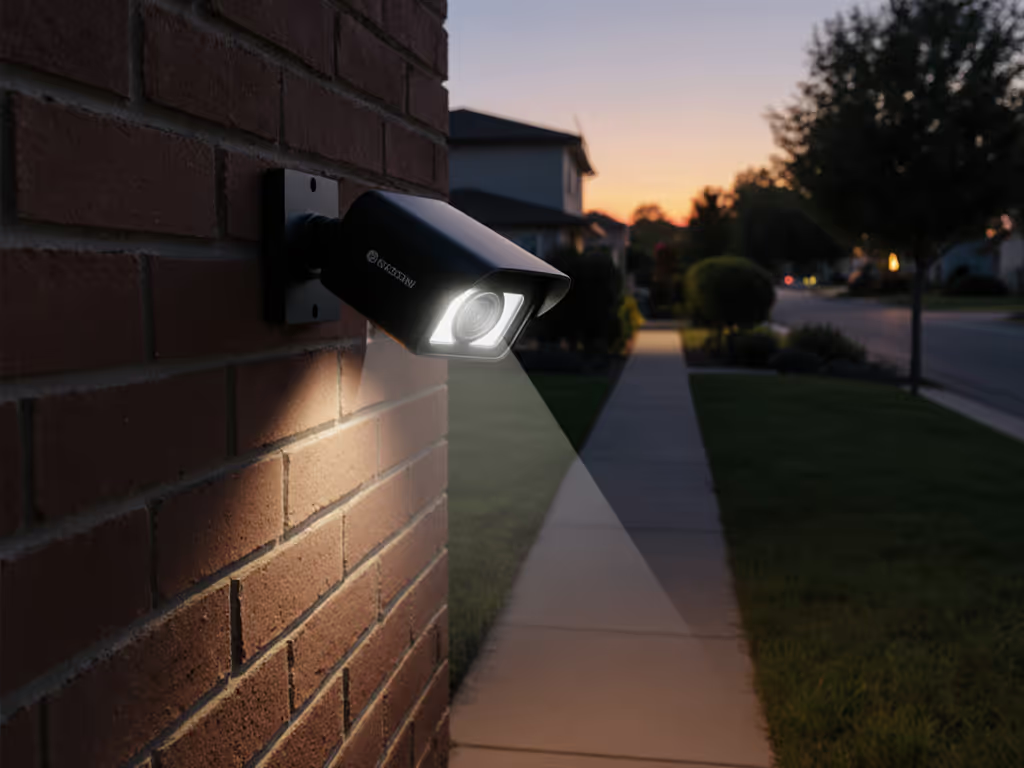
As someone who designs camera systems that keep evidence in your hands while minimizing data exhaust, I've witnessed how common security camera misconceptions lead to frustrated homeowners and business owners. Many believe in capabilities that don't exist, creating blind spots both literally and figuratively. Let's separate reality from fiction with surveillance myths that impact your actual security, especially when things go wrong. After all, privacy done right improves reliability, not just optics.
Q: Can one camera really cover my entire property?
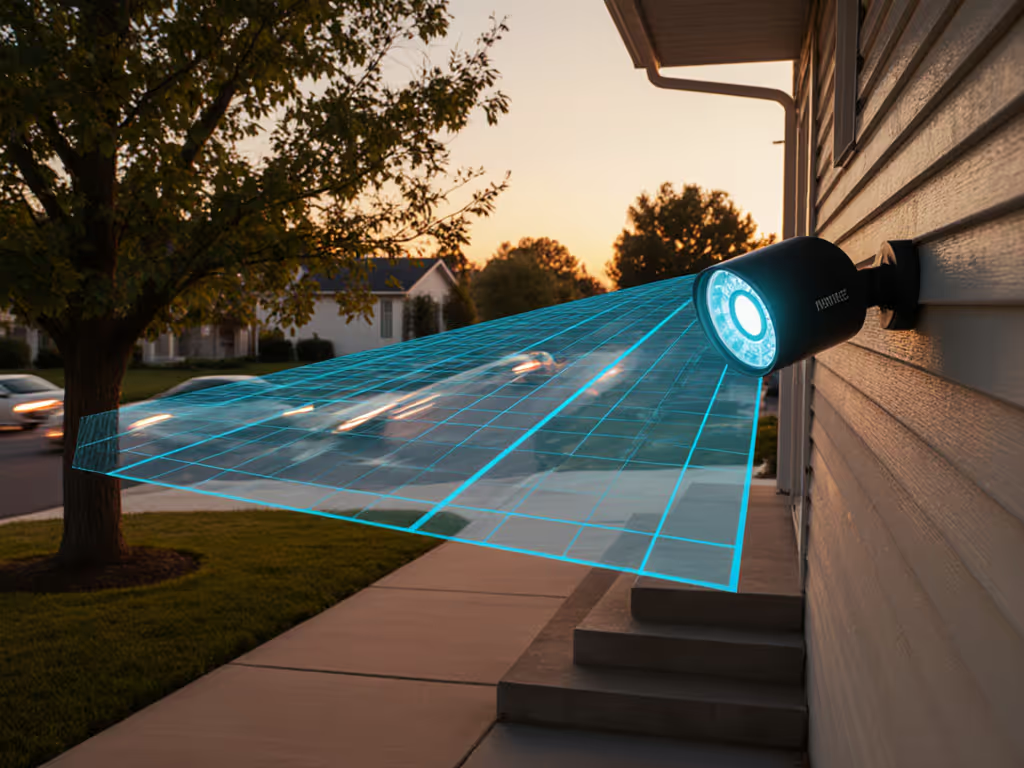
A: This is perhaps the most dangerous misconception about security camera limitations. No single camera can effectively monitor multiple angles of a standard property. Field of view constraints mean you'll inevitably create blind spots (areas where porch pirates, package thieves, or intruders can operate unseen). Strategic placement of multiple cameras with overlapping coverage is essential for meaningful protection. Think of it like a net: gaps between cameras create opportunities for unwanted activity. From my experience designing neighborhood security setups, I've seen too many homeowners invest in one expensive camera pointed at their front door while missing package thefts happening just outside its frame. Proper coverage requires understanding both what your camera can see and what it cannot, and planning accordingly.
Q: Do security cameras really capture clear faces at night at long distances?
A: Many marketing materials suggest infrared night vision provides crystal-clear identification at significant distances. Reality is far different. While infrared allows cameras to "see" in darkness, the resulting image is typically low-resolution black and white with limited detail. Facial recognition at distances beyond 15 to 20 feet is often impossible, regardless of what manufacturers imply. License plates frequently appear as indistinct blurs. This surveillance effectiveness gap becomes critical when reviewing footage after an incident, you might see "a person" but not identify who they were. When a neighbor's doorbell footage of our street ended up in a viral group with faces and license plates exposed, it wasn't the camera's fault, it was the unrealistic expectation of what that footage could realistically capture.
Q: Is cloud storage inherently more secure than local storage?
A: Security professionals often perpetuate the myth that cloud storage is automatically safer. While cloud services offer convenience, they introduce additional attack surfaces. Every connection to the internet represents a potential vulnerability. Local storage, when properly implemented with encryption and access controls, often provides superior security for your footage. For a detailed breakdown of the trade-offs, see our cloud vs local storage comparison. Consider: when cloud services experience outages (as major platforms do periodically), your access to critical evidence disappears. When my neighbor's footage went viral, it wasn't because of a sophisticated hack, it was due to frictionless sharing features in the cloud app. Local-first storage with proper encryption creates meaningful barriers against both accidental exposure and malicious access. As I always say: Minimize, then secure.
Q: Can I really rely on privacy zones and masking features to protect my neighbors' privacy?
A: Privacy concerns about cameras overlooking neighboring properties are valid, but masking features aren't foolproof solutions. Many systems allow you to digitally "mask" areas of the frame, but these can be accidentally disabled during firmware updates or misconfigured during initial setup. More concerning, the masked footage often still exists in the raw recording, only hidden from your view. True privacy protection requires a principle-based approach: point cameras only where necessary, limit recording to essential areas, and establish clear retention policies. This isn't just about being a good neighbor; it's about reducing your own liability. Review your state's rules in our security camera laws guide to avoid costly mistakes. Debunking privacy myths often reveals that the most effective privacy protection comes from thoughtful placement and limited data collection, not just digital masking.
Q: Are hidden cameras a good solution for covert security?
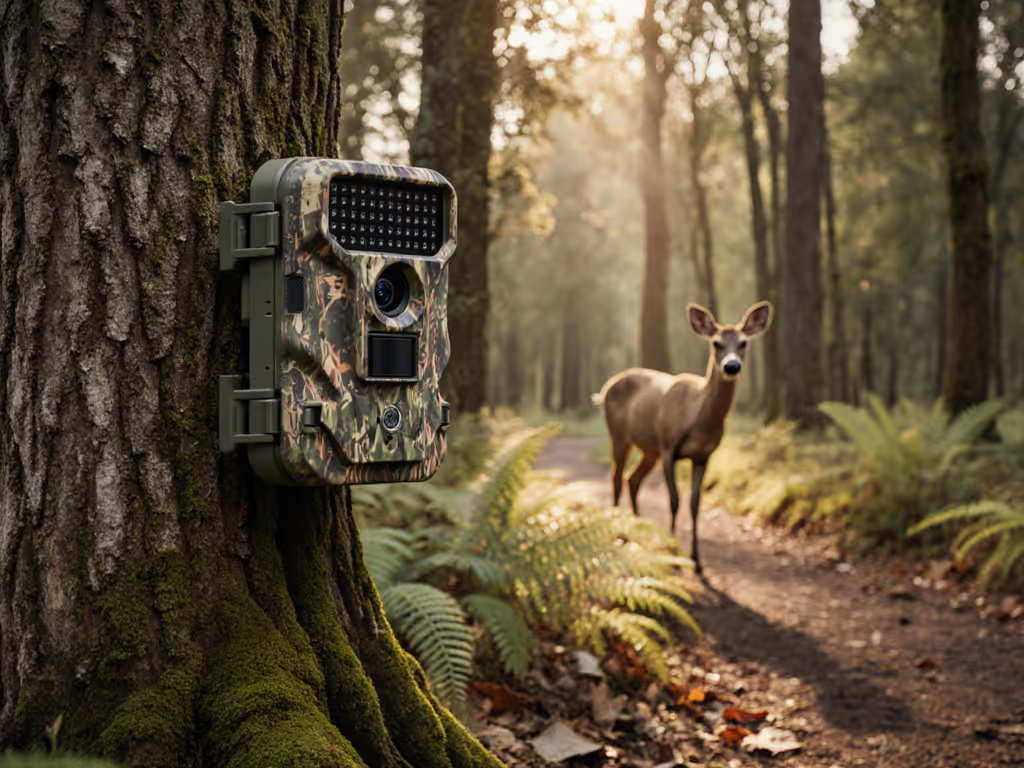
A: While hidden cameras might seem appealing for certain situations, they introduce significant limitations and ethical concerns. First, hidden cameras typically lack proper lighting solutions, making nighttime footage nearly useless. Second, they often have restricted fields of view. Most critically, many jurisdictions have strict laws about where hidden cameras can be placed, particularly regarding areas where people have a reasonable expectation of privacy. Beyond legality, consider this: visible security cameras serve as a deterrent, potentially preventing incidents before they occur. If your security strategy relies on secrecy rather than deterrence, you're designing for post-event investigation rather than prevention. This approach creates a false sense of security while generating footage that may not be admissible in court.
Q: If I have cameras, do I need to constantly monitor them?
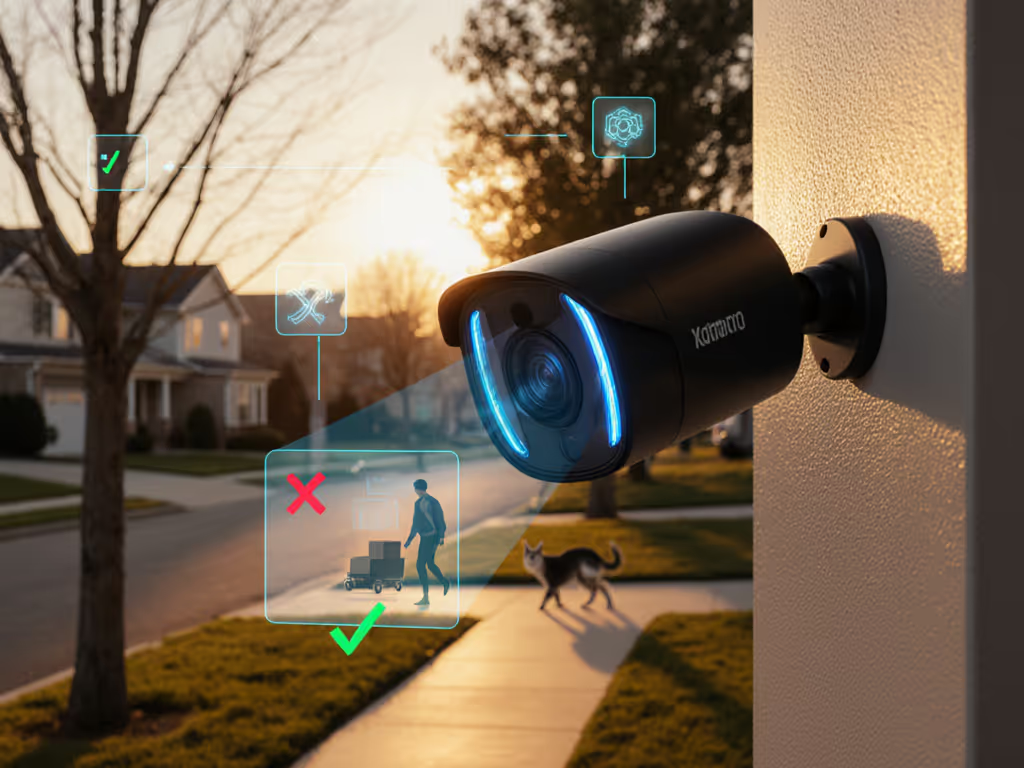
A: This common misconception creates unnecessary stress for homeowners. Modern systems with intelligent motion detection (when properly configured) only alert you to relevant activity. The key is understanding your specific threat model: what types of activity genuinely warrant your attention? For most residential properties, person detection focused on entry points provides meaningful alerts without notification fatigue. Motion detection that triggers on every falling leaf or passing car creates alert exhaustion (where you eventually ignore all notifications). I've seen homeowners disable their systems entirely because they received 50+ false alerts daily. Effective monitoring isn't about watching constantly; it's about configuring precise detection zones and sensitivity levels that match your actual security needs. This approach reduces cognitive load while increasing the signal-to-noise ratio of your alerts.
Understanding Your True Security Needs
The most resilient security systems acknowledge their limitations rather than pretending they don't exist. When building your setup, consider:
- What specific threats are you actually protecting against?
- How will you verify your system is working when you need it most?
- What happens when internet connectivity fails or the power goes out?
- How long do you truly need to retain footage?
These questions move you from fear-based purchasing to principle-based guidance. Privacy and reliability reinforce each other, when you control your data, you control your risk. Rather than chasing mythical "perfect" coverage, focus on meaningful coverage where it matters most.
Minimize, then secure. This simple approach to risk-to-control mapping ensures you collect only what you need while protecting what you keep.
True security isn't about having cameras everywhere, it's about having the right information at the right time, without creating unnecessary vulnerabilities in the process. By understanding these security camera misconceptions, you can design a system that provides genuine peace of mind rather than false confidence.
Further Exploration
If you're interested in building a security system that respects your privacy while providing reliable protection, consider researching:
- Local storage solutions with end-to-end encryption
- Open standards like ONVIF that prevent vendor lock-in
- Camera placement strategies that maximize effectiveness with minimal coverage
- Data retention policies that balance security needs with privacy concerns
The most effective security systems aren't those with the most features, but those thoughtfully designed to address your specific situation without creating new risks.