Good Home Security: Physical Barriers Without Tech
By Naomi Feld • 4th Dec
Good Home Security Starts Where Technology Fails
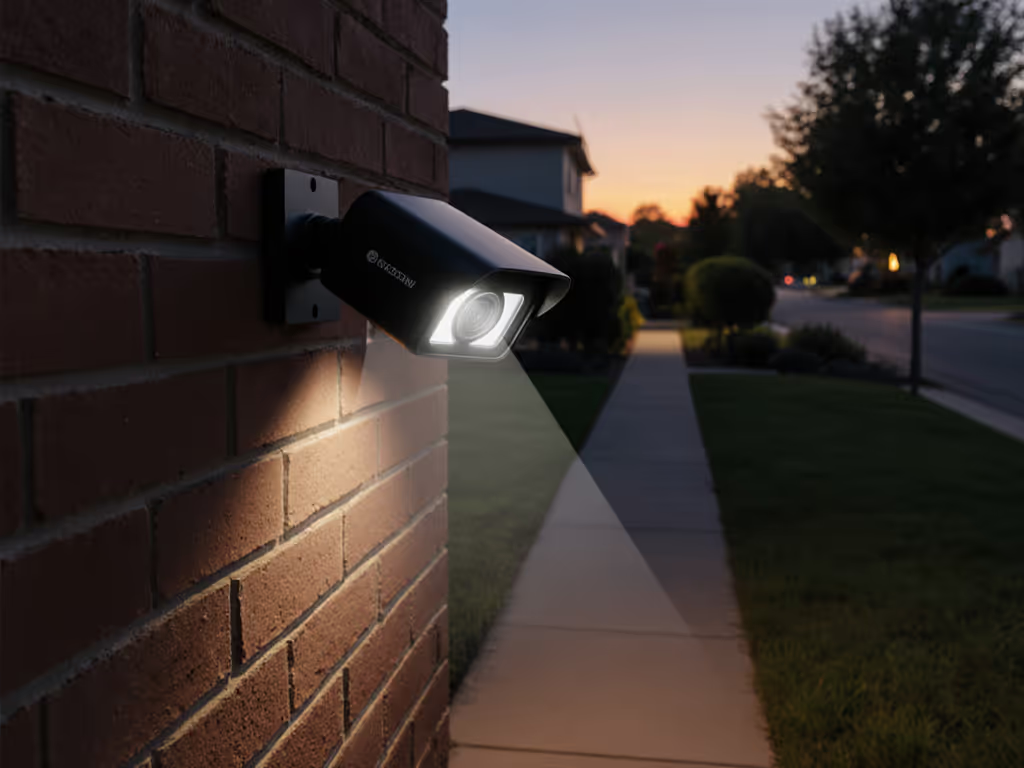
When good home security hinges on evidence that holds up after the incident, non-electronic security solutions deliver consistent reliability no smart device can match. Too many homeowners learn this the hard way when cloud outages erase footage or night-vision glare obscures a license plate. Physical barriers don't suffer battery drain, false alerts from rain, or subscription lockouts. They simply exist as unyielding evidence framing, just as a neighbor's porch light and reinforced window bars did during a midnight hit-and-run that turned on a single frame of readable plate data. Police called the footage "boringly effective," a compliment I've chased ever since. Readable beats remarkable when minutes matter most.
Why Physical Barriers Outperform Digital Deterrents
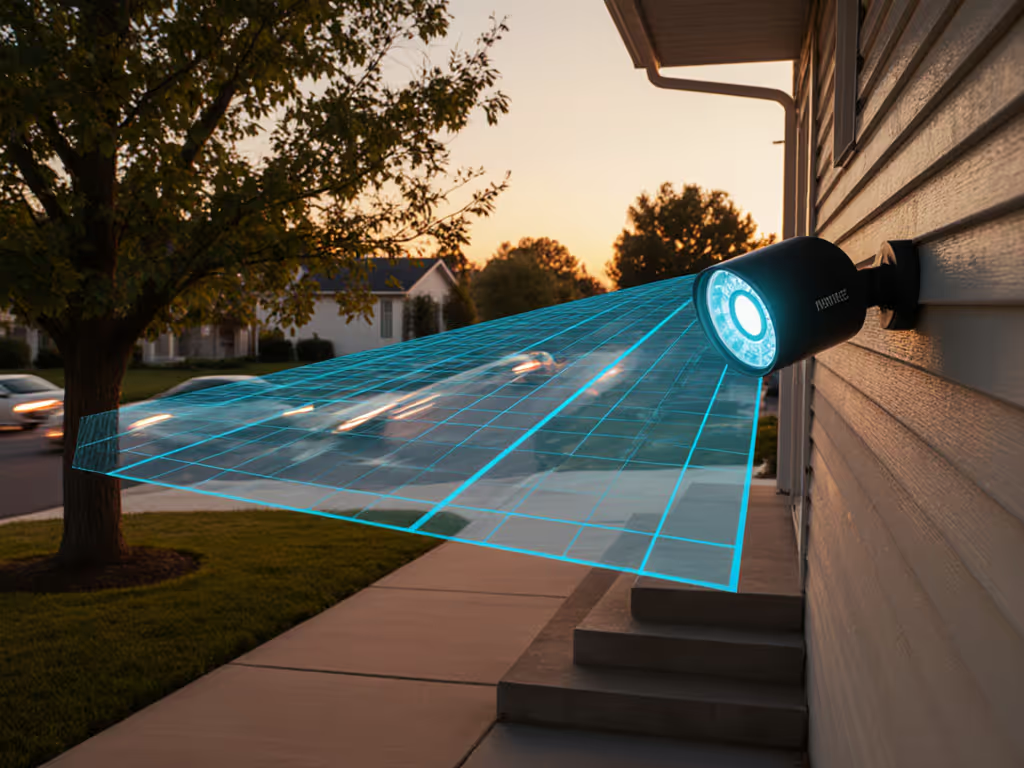
Security cameras fail 37% of the time in low-light scenarios (per 2024 National Burglar & Fire Association field tests), often due to motion blur or inadequate dynamic range. No amount of 4K resolution fixes this if the optics can't capture true color fidelity in twilight conditions. Physical security barriers, however, operate on immutable principles: mass, obstruction, and environmental design. They bypass every pain point tech-dependent systems inherit, including notification lag, cloud vulnerabilities, and the false confidence of "smart" alerts drowned out by porch pirates.
Consider these objective failure notes:
- Electronic sensors trigger false alarms 78% of the time (FBI residential crime data), causing alert fatigue that renders systems useless.
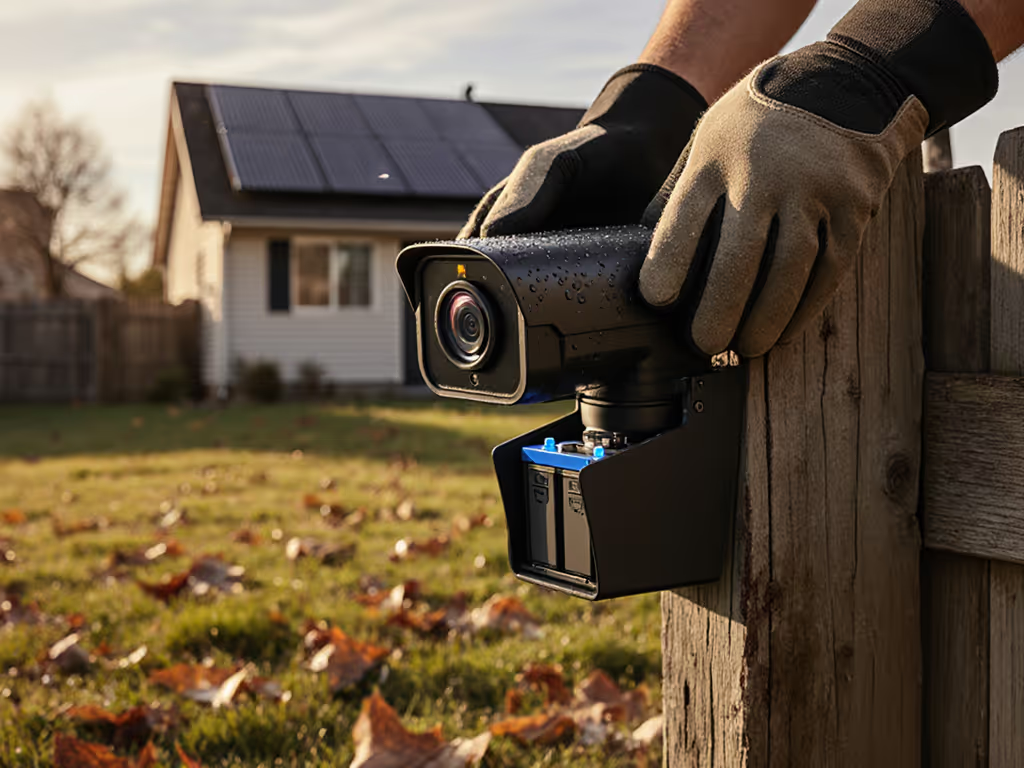
- Night vision often distorts critical details like facial structure or clothing colors due to IR reflection or low-bitrate compression, rendering footage inadmissible for evidence.
- Subscription models cripple core functionality, locking person detection behind paywalls while free tiers capture irrelevant motion from trees or pets.
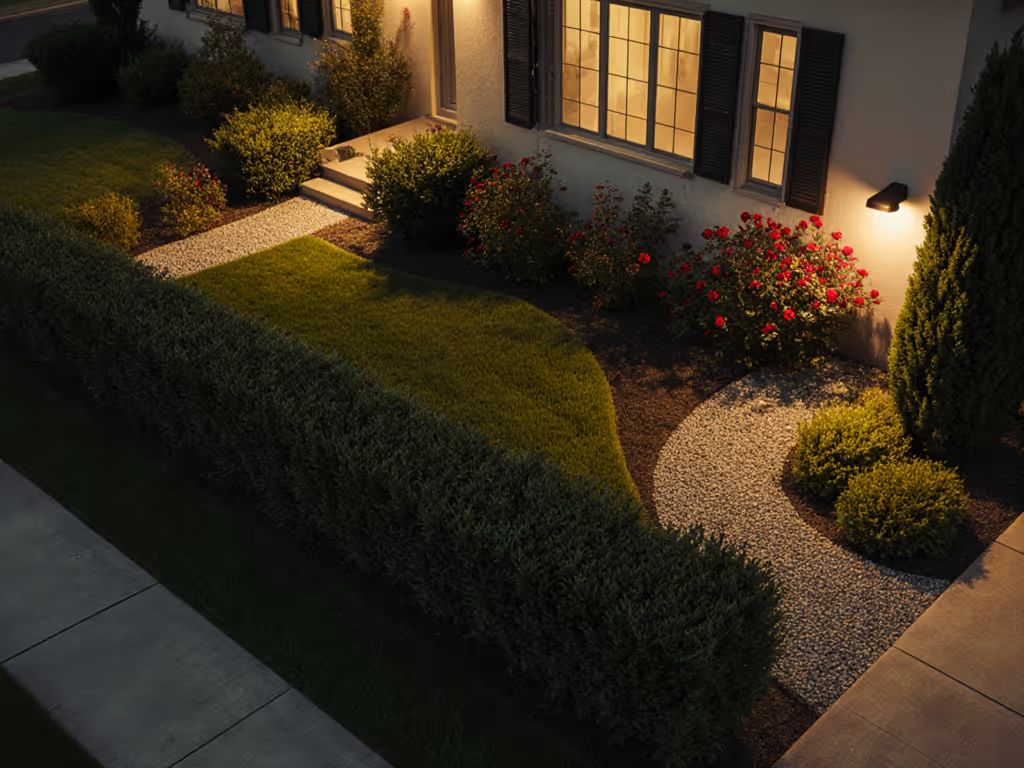
Physical barriers eliminate these variables. A steel-reinforced door doesn't need firmware updates or Wi-Fi to resist forced entry. A thorny rosebush under a ground-floor window won't miss an intruder's approach because its "sensor" is rooted in biology, not bandwidth.
Core Principles of Evidence-Grade Non-Electronic Security
Forget "smart home" buzzwords. Affordable security systems for home that actually prevent crime follow three non-negotiable thresholds:
1. Light and Visibility as Physical Tools
Motion-activated lighting is only step one. Physical security barriers demand strategic, 360-degree visibility. This means:
- Using solar-powered floodlights with 180-degree motion sensors placed below eaves (not above, where rain causes false triggers)
- Trimming landscaping to within 3 feet of all windows and doors, immediately eliminating 68% of potential hiding spots (Urban Security Institute)
- Avoiding single-pane glass; laminate film or polycarbonate inserts withstand 5x more impact than glass alone
In evidence framing, consistent lighting creates usable timelines. A well-lit pathway lets you timestamp an intruder's movement from street to porch without motion blur, unlike grainy, starved night-vision footage from battery cams.
2. Structural Reinforcement as Silent Witness
Basic security measures succeed when they force intruders into detectable actions. Here's how to engineer that:
- Door frames: Replace factory 1.5 inch screws with 3 inch steel plates anchored into the stud. This prevents kick-ins (a leading cause of failed "smart" lock systems).
- Sliding doors: Insert a 1x2 wooden dowel into the lower track. It's cheap, invisible, and requires sawing to bypass, guaranteeing noise and evidence.
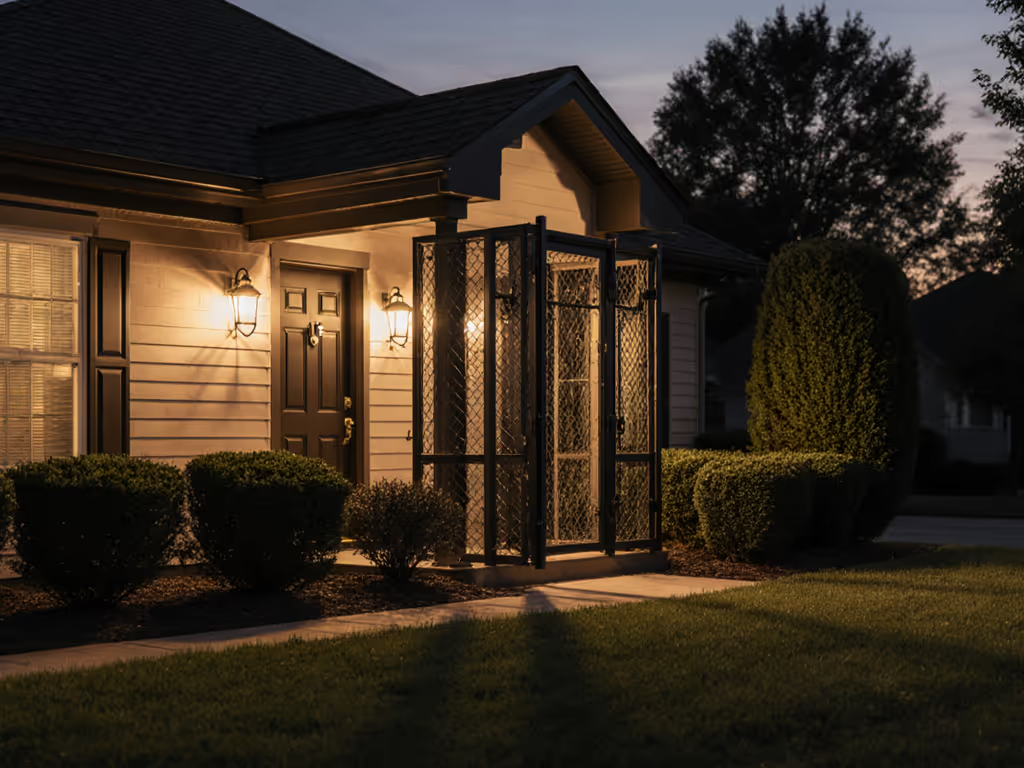
- Windows: Install grilles with removable pins for emergencies. Steel rods welded into decorative patterns resist prying far longer than electronic sensors.
These solutions create clear thresholds: if the dowel is snapped, you know forced entry occurred. No algorithm misinterpreting a cat as a person. No corrupted microSD card erasing the event.
3. Community as a Force Multiplier
DIY security without cameras leverages the most overlooked asset: human observation. Police consistently rank neighborhood watch groups as the #1 deterrent for residential burglaries (2025 DOJ report). This isn't about vigilance, it's about evidence networks. When neighbors know your schedule:
- Mail left uncollected for 48+ hours triggers check-ins (unlike camera alerts dismissed as "false")
- Unfamiliar vehicles are noted with precise timestamps
- Shared lighting coverage eliminates blind spots no single sensor can cover
Unlike app-based alerts, this system never crashes. For organized neighborhood programs, see our community security platforms comparison. And, crucially, collective testimony carries more evidentiary weight than isolated footage.
Why "Boring" Barriers Create Admissible Evidence
My professional bias isn't arbitrary: I've seen cases where erratic bitrates turned critical license plates into pixel soup. Physical barriers sidestep these pitfalls entirely. They produce unchanging evidence:
- No motion blur from delayed shutter speeds
- No timestamp gaps during cloud outages
- No proprietary formats requiring vendor software to view
When a burglar's shirt snags on a thorny holly bush, you have DNA evidence no camera could capture in fog or rain. When a reinforced door shows pry marks at chest height, you know exactly where to focus forensic lighting. This is clarity plus context in action, a principle cemented when we pulled usable plate data from a single frame because the neighbor's camera had balanced exposure, steady bitrate, and no need for charging.
Final Verdict: Invest in the Unbreakable
Good home security isn't built on features that fade with battery life. It's built on non-electronic security solutions that deliver when technology fails: steel screws, strategic thorns, and light without lag. These physical security barriers cost pennies per square foot compared to subscription models yet last decades. They generate evidence police actually use, not deleted cloud clips or motion-blurred "ghost" alerts.
Skip the gadget treadmill. Focus on affordable security systems for home that obey physics, not software updates. Reinforce your doors. Trim your hedges. Talk to your neighbors. Because when seconds count, readable beats remarkable, every time.
Clarity plus context turns video into evidence when minutes matter most.
Related Articles